Topic · 9 articles
McKinsey Solve: articles and guides
McKinsey Solve is the game-based assessment McKinsey sends to many applicants before the first interview. It replaced the older Problem Solving Game (PSG), and it is built to measure how you reason through a problem rather than what you know about business. McKinsey itself says no business knowledge is needed.
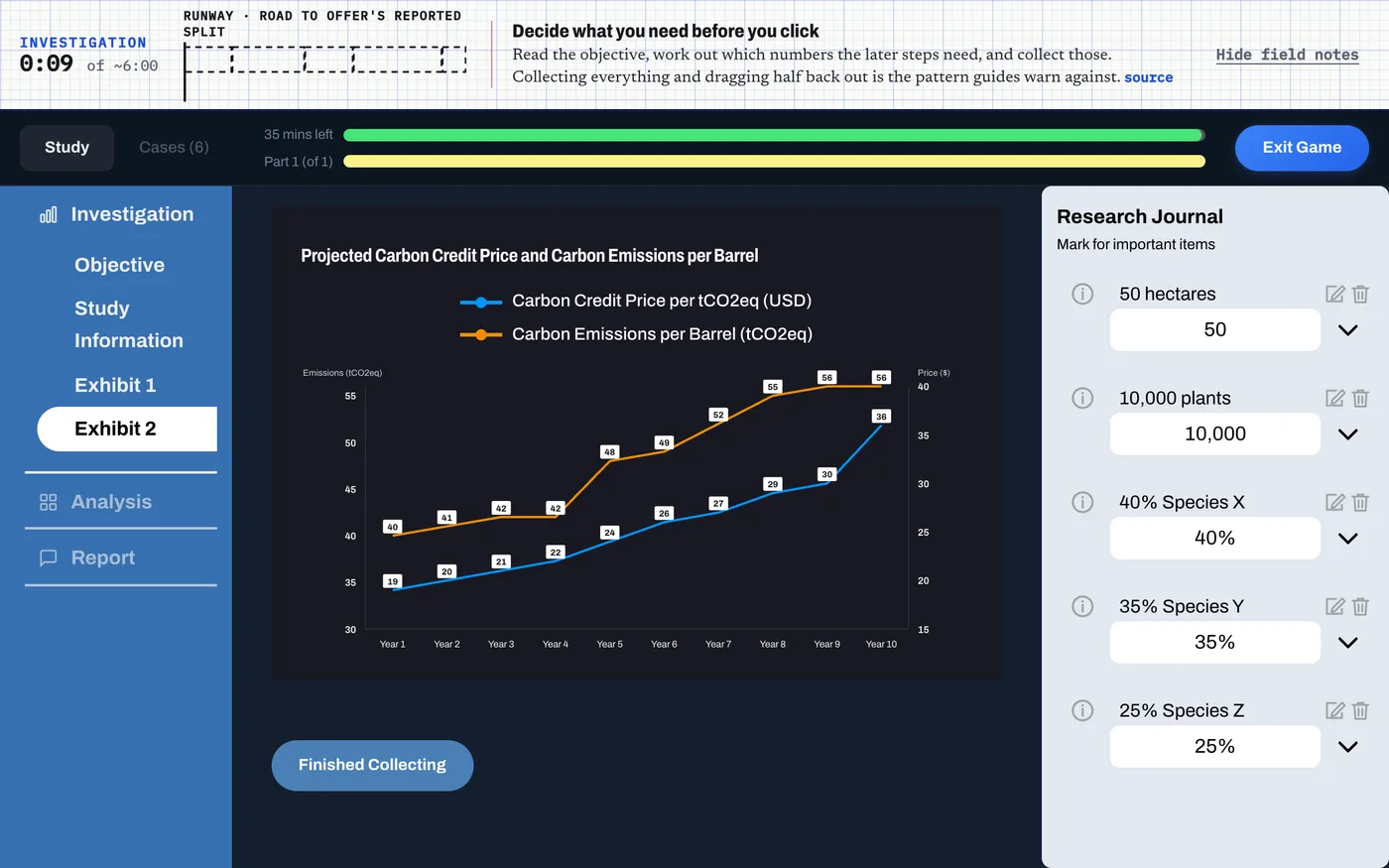
This hub collects everything we have written on Solve. Start with the complete McKinsey Solve guide if you are new to the test, then go game by game. Each article shows the date its format facts were last checked, because McKinsey changes the games more often than most prep material admits.
Which games are in McKinsey Solve?
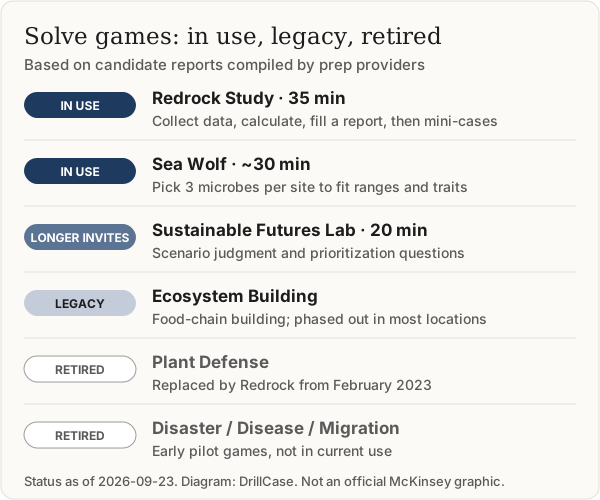
Most candidates now report two games: Redrock, a research-and-calculation case study, and Sea Wolf, where you pick microbes that meet a set of conditions. Some invitations add a third game, the Sustainable Futures Lab, which is why invitations come with different total times. Older games such as the Ecosystem Creation task still show up in older guides. Our article on what changed in the Solve format tracks those shifts.
How is McKinsey Solve scored?
McKinsey does not publish a pass mark, and candidates are not normally shown their score. What is known is that the games record both your final answers and how you got there. Our McKinsey Solve score explainer separates what is documented from what is estimated.
How should you prepare?
Practice the mechanics until they no longer cost you time: reading a data table fast, doing percentage and ratio math without errors, and keeping a clean record of your working. Then rehearse the full timing once or twice. Our comparison of Solve prep tools covers where free and paid practice differ.
Top articles on McKinsey Solve
- Guide · 18 min read
What Is McKinsey Solve? A Guide to Redrock, Sea Wolf and SFL
How McKinsey Solve works now: Redrock, Sea Wolf and Sustainable Futures Lab, scoring, timing by invitation, tools allowed and a 3-week prep plan.
- 8 min read
McKinsey Solve Passing Score: How Is Solve Scored, and What Is the Pass Rate?
How McKinsey Solve is scored on product and process, what a passing score looks like, reported office differences and pass-rate estimates, with sources.
- 7 min read
Failed McKinsey Solve? How Long Until You Can Reapply
Failed the McKinsey Solve game? How long the reapply cooldown really is, whether it covers every office, and a 30-day plan to fix the game that cost you.
More articles on McKinsey Solve
6 articles- McKinsey Redrock Study: How Do the Investigation, Analysis, Report and Cases Work?McKinsey Solve · Oct 2, 2026
- McKinsey Solve in 7 Days: What Should You Do Each Day Before the Test?McKinsey Solve · Oct 2, 2026
- Sea Wolf Microbe Math: How Does the Averaging Rule Work?McKinsey Solve · Sep 22, 2026
- Can You Use a Calculator on McKinsey Solve?McKinsey Solve · Sep 22, 2026
- What Is McKinsey's Sustainable Futures Lab (SFL)?McKinsey Solve · Sep 22, 2026
- What Changed in the McKinsey Solve Assessment?McKinsey Solve · Sep 23, 2026
Practice what you just read
Rehearse Redrock, Sea Wolf and the Lab on a clock
Solve rewards candidates who already know where everything is on the screen. DrillCase's scenarios follow the working layout candidates describe (investigation menu, exhibits, research journal, timer), so on test day your attention goes to the numbers.
- Solve-style scenarios
- 21
- Redrock-style studies
- 10
- free demo scenario
- 1
- 10 Redrock-style studies, 10 Sustainable Futures Lab-style sets, a Sea Wolf-style game with unlimited generated runs, and an archive of 2 Ecosystem games
- Timed sessions with a built-in tutorial on the first screen
- 1 demo scenario is free, so you can check the fit first
Basic$991 year · 3 Redrock + unlimited Sea Wolf · final sale
VIP$159Lifetime · 7-day money-back
Solve VIP ($159) carries a 7-day money-back guarantee, even if used; Basic is final sale. Refund policy. DrillCase is independent practice material and is not affiliated with McKinsey, BCG or Bain.