Format accuracy
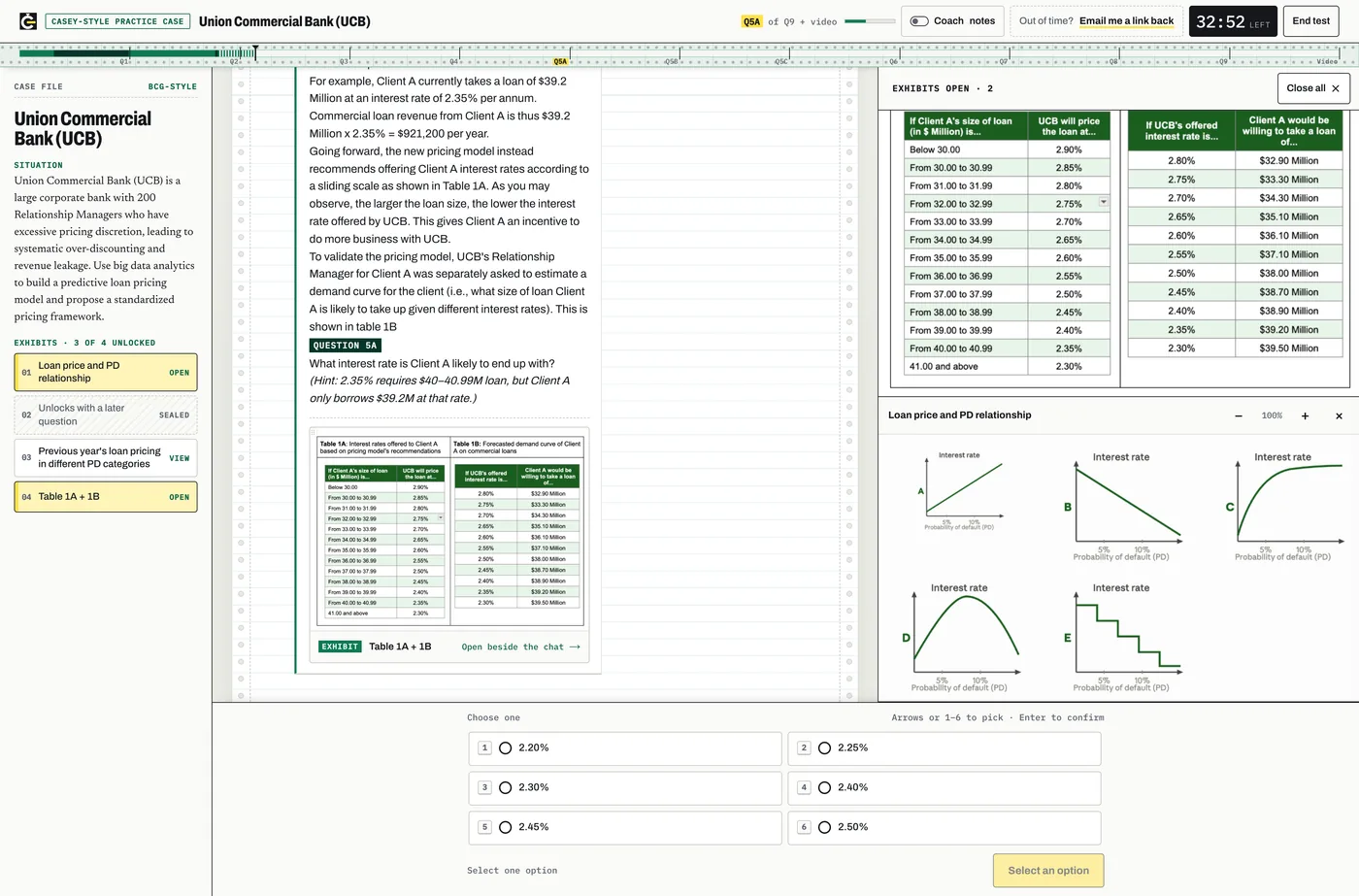
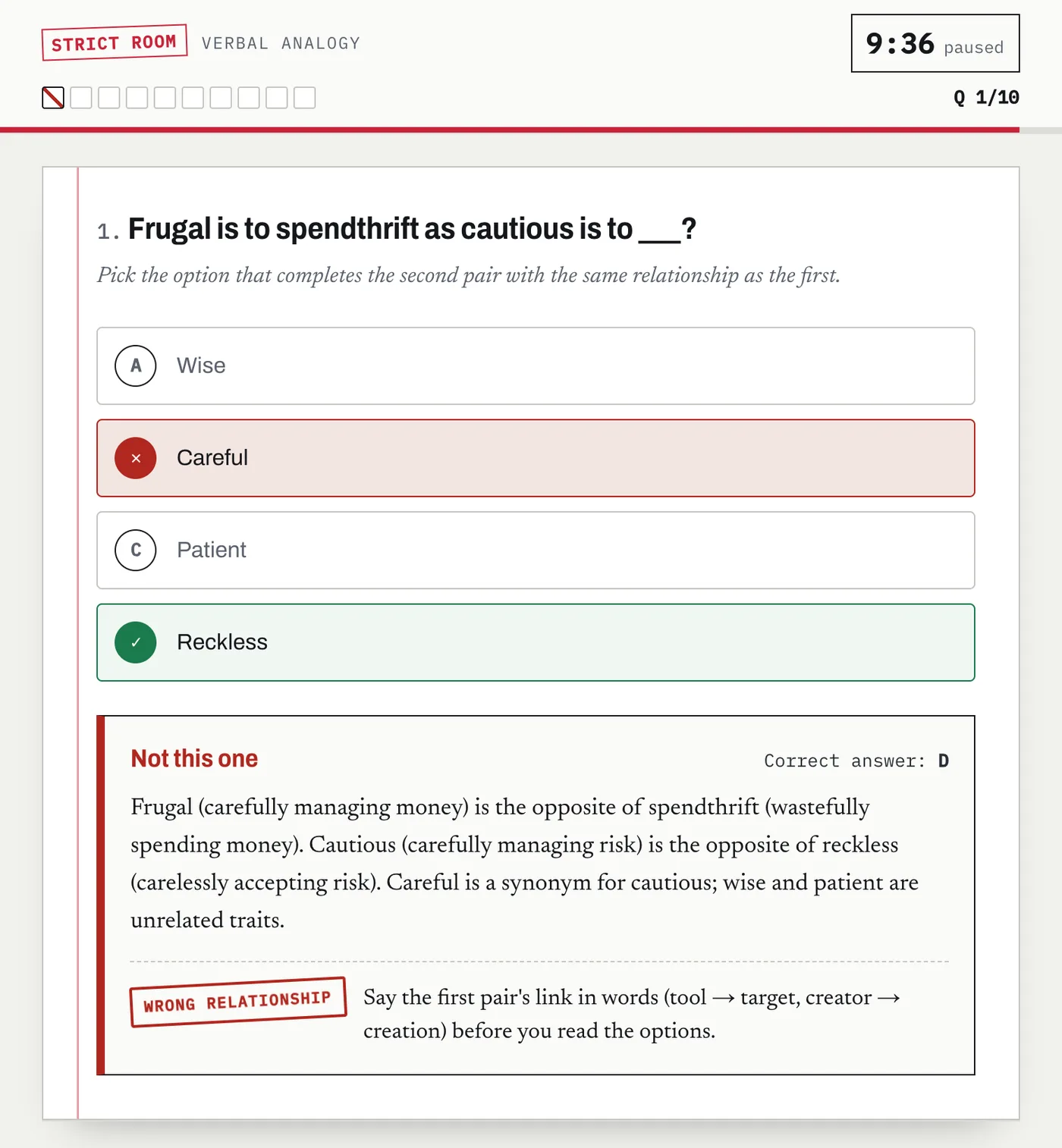
Question types, exhibit layouts, timing and interface behavior follow what the firms and test providers publish and what candidates describe. Where sources disagree, the guide says so.
Audit logCounted
Where our format details come from, how every scenario is checked before it goes live, and exactly what we count. Written so you can judge the practice before you use it.
The problem with most prep
Firms publish little about their online tests, and much of what circulates online is one person's memory of one sitting. Practice built on a wrong detail trains the wrong habit, such as expecting to go back to a question you cannot revisit. So the rules below are about what we are allowed to rely on.
How a scenario gets onto DrillCase. Each branch is a gate: content that fails a check goes back a step.
We start from what is documented in public: firm careers pages, test-provider descriptions, and candidates' own accounts of the question types, exhibits, timing and interface they saw.
A format detail goes into a scenario only when more than one independent source describes it the same way. Single-source details are left out or flagged as uncertain in our guides.
Each scenario is worked end to end to confirm the answers, the calculations and that it fits the time limit it claims.
Scenarios go live. When a user reports that something differs from their real assessment, we check it against other sources and fix or retire the scenario.
These are the only numbers the rest of the site may quote. They were counted from the live database on 2026-09-23. Marketing copy rounds them down (for example 450+), never up.
bcg.cases275 questions
bain.questions23 timed sets, plus 3 mock tests built from those pools
mckinsey.scenariosCurrent games: Redrock 10 · Sustainable Futures Lab 10 · Sea Wolf 1 (unlimited generated runs). Not counted: 2 Ecosystem Creation archive games (reported phased out of most invitations)
caseLibrary.casesfull case studies
drills.questionsmental math 500 · charts 50 · market sizing 32
glossary.termsprices7 lines · rounded down in copy, never up
Our standards
Question types, exhibit layouts, timing and interface behavior follow what the firms and test providers publish and what candidates describe. Where sources disagree, the guide says so.
Every count on the site comes from one facts file, recounted from the live database. Labels round down, so "450+" never means fewer than 450.
No pass rates, ratings or user counts we cannot verify. No customer reviews are shown until each can be proven: the order it came from, the date its writer gave permission, and their consent to the name shown.
When a candidate reports a format change, we check it and update or retire the affected scenarios.
Consulting firms change their assessments. BCG has modified Casey since it was introduced, Bain uses more than one test provider, and McKinsey changes which games a Solve invitation includes.
When a change is confirmed by more than one source, we update or replace the affected scenarios and record the change in the relevant guide. Our McKinsey Solve guide keeps a dated changelog, and the BCG Casey guide and Bain online test guide list their sources.
Format facts in the plan emails link to our guides, which show the date each was last checked.
Tell us what you saw and on which page or scenario. We check every report against other sources and fix or retire what is wrong.
Report an error: support@drillcase.com
DrillCase is an independent practice provider. It is not affiliated with, endorsed by or sponsored by McKinsey & Company, Boston Consulting Group or Bain & Company.