Topic · 4 articles
Bain online test: articles and guides
Many Bain offices ask applicants to sit an online aptitude test before the first interview. For several years that test was delivered on the SOVA platform, with numerical, verbal and logical reasoning sections and, in some versions, situational judgement. Some processes now use TestGorilla instead, so the name of the test in your invitation matters.
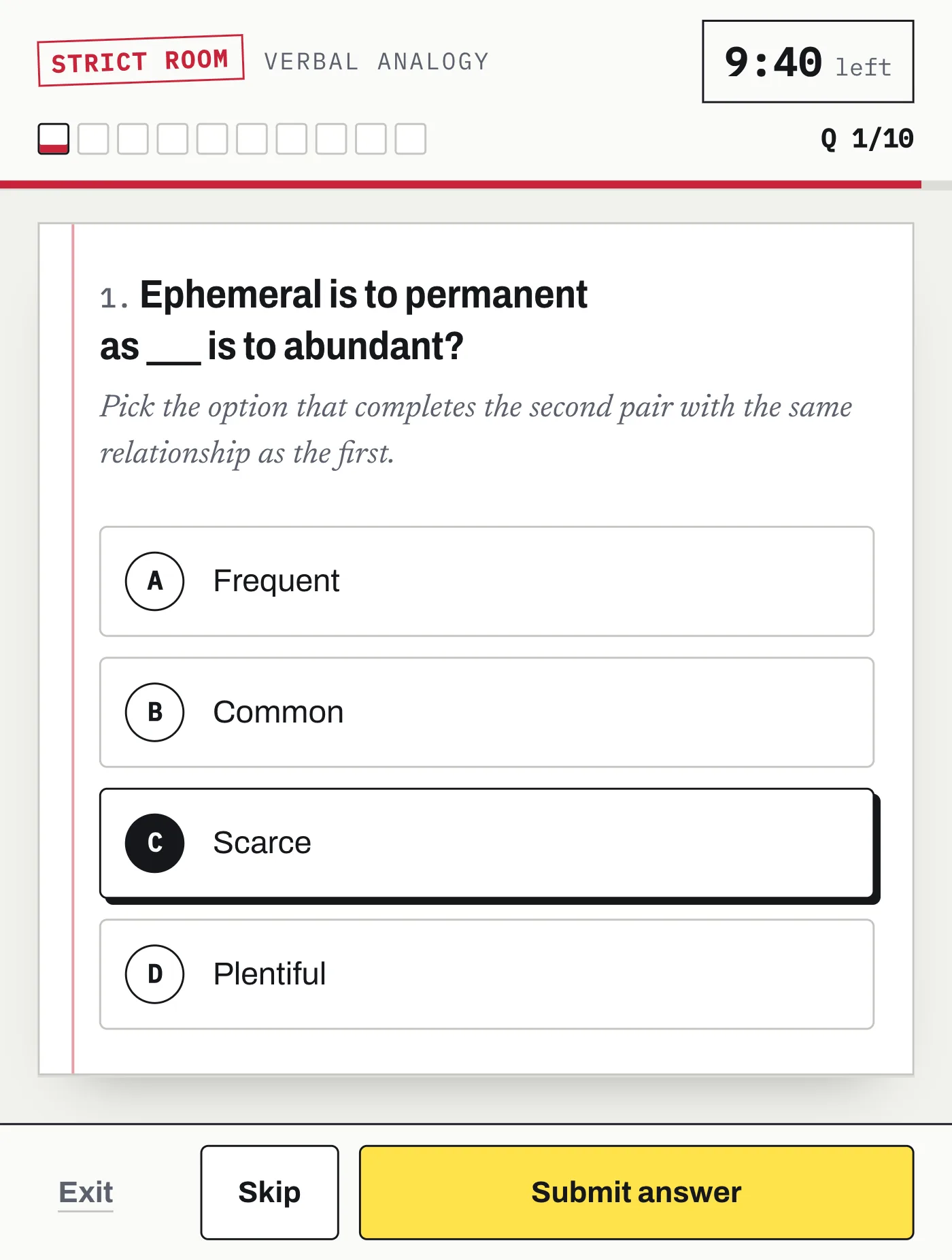
This hub collects our Bain articles. The Bain online test guide explains which test you are likely to get and what each section measures. The shorter articles go deep on one section at a time.
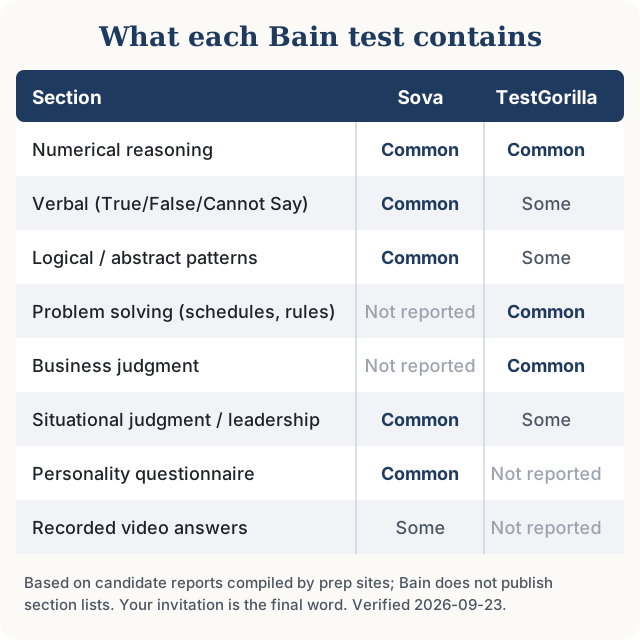
What sections does the Bain test include?
Candidates usually meet numerical reasoning (tables and charts, often with a calculator), verbal reasoning (true, false or cannot say), logical or abstract reasoning, and sometimes a situational judgement block. Our aptitude test format guide compares these sections with the tests other firms use.
How do you raise your numerical score?
Speed comes from reading the question before the data, estimating before calculating, and watching units. The ten numerical reasoning tips article turns those habits into drills you can repeat.
Top articles on Bain online test
- Guide · 13 min read
Bain Online Test: Which Assessment You'll Get and How to Prepare
Which Bain online test you'll get (Sova or TestGorilla), what each section asks, how scoring works and how to prep, with a sample item per section.
- 7 min read
Bain Verbal Reasoning: How Do True, False and Cannot Say Work, and Is It Still on the Test?
Bain verbal reasoning explained: the True, False or Cannot Say rule, six worked items, whether Sova still sets it, and the logical and SJT sections too.
- 4 min read
How Do You Improve Your Bain SOVA Numerical Reasoning Score?
Ten tips for the numerical part of the Bain online test (Sova or TestGorilla): estimation, units, pacing, chart reading, shortcuts and calculator use.
More articles on Bain online test
1 articlesPractice what you just read
Practice each Bain section on its own clock
Most points on an aptitude test are lost to the clock, not to hard questions. DrillCase sets are timed and auto-scored, one question per screen, so you learn the pace section by section before you sit a full mock.
- Bain-style questions
- 476
- timed test sets
- 23
- full mock tests
- 3
- 174 numerical, 150 verbal, 80 situational judgement and 32 logical questions, plus data interpretation and case items
- 3 full-length mock tests built from those pools
- A free 50-question verbal sample bank to try first
Single module$20Verbal, numerical, situational or logical
Comprehensive$99Every Bain-style section and the mock papers
Comprehensive refunds within 7 days if you have opened no more than 3 sets (mock papers included). Single modules are final sale, so start with the free verbal sample. Refund policy. DrillCase is independent practice material and is not affiliated with McKinsey, BCG or Bain.